
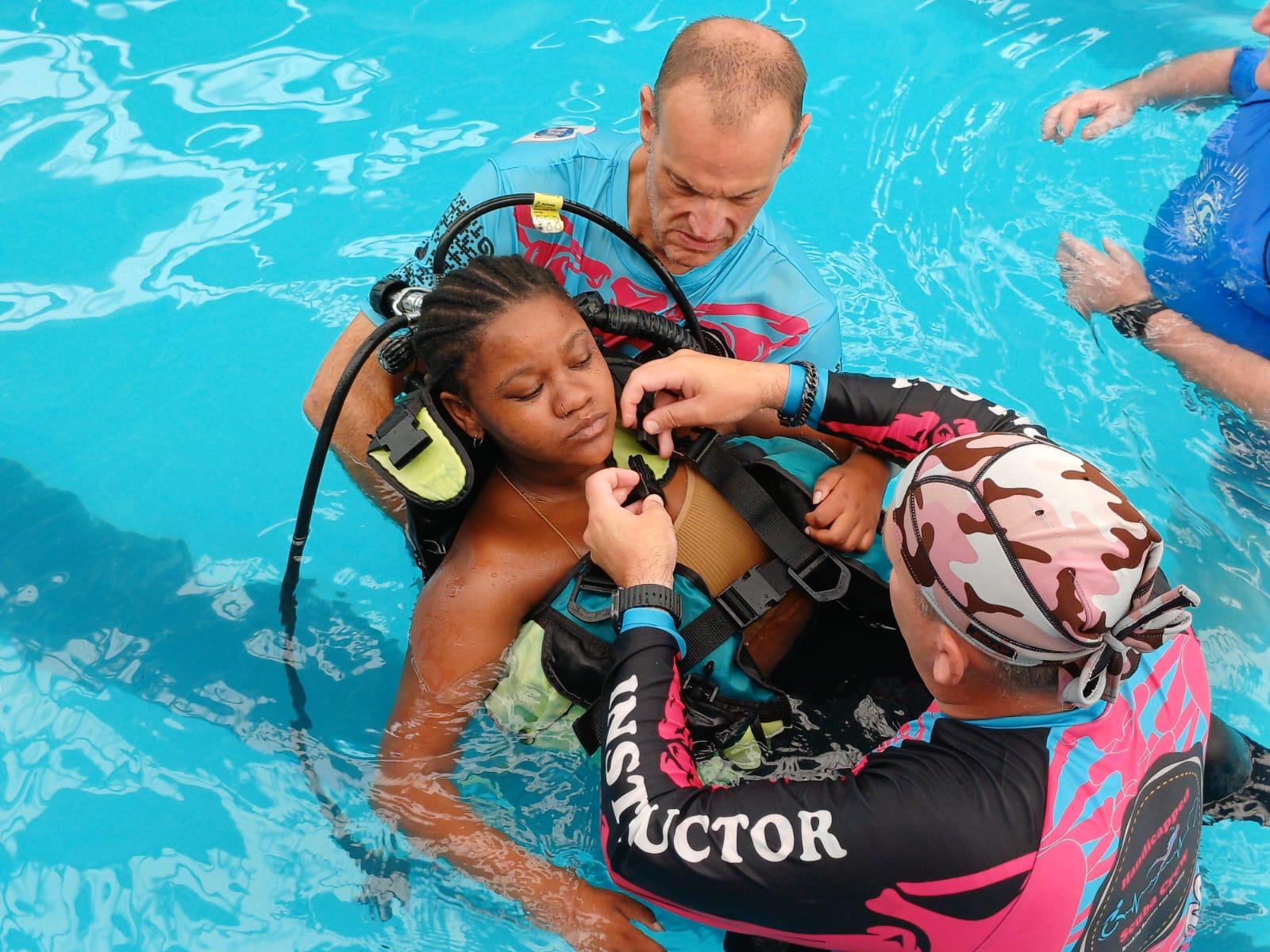
Scuba Crew in South Africa leading in Accessible ocean tourism.
-
Tanya Satish
- April 20, 2026
- No Comments
Accessible Ocean Tourism is no longer a fringe conversation—it is becoming one of the most powerful frontiers in truly sustainable travel. Across the globe, conversations around inclusion often remain theoretical, discussed in conference rooms and policy documents. But in places like Sodwana Bay, South Africa that conversation is being lived, breathed, and experienced beneath the surface of the ocean itself.
In South Africa, a group of individuals are quietly but profoundly reshaping what access to the underwater world looks like.
Meet Byron Ray, a core member of Scuba Crew, is not just advocating for inclusive diving—he is building systems, communities, and deeply human experiences that make it possible. Scuba Crew itself is a collective of passionate divers in South Africa focused on training, exploration, and building a strong, supportive dive community. Rather than operating as a traditional commercial dive centre, it brings together individuals who share a commitment to meaningful diving experiences and connection.
Through his work with Handicapped Scuba Crew and Scuba Crew, he is creating a model where accessibility is not an afterthought but the foundation.
What makes his work stand out is not just the logistics of adaptive diving, but the emotional and social transformation it enables. This is not about ticking boxes for inclusivity; it is about restoring agency, dignity, and joy. It is about creating a space where disabled and non-disabled divers exist not in separation, but in shared experience. In doing so, Byron is not just contributing to tourism—he is advancing the very principles of community engagement, accessibility, and ocean connection that define the future of sustainable travel.
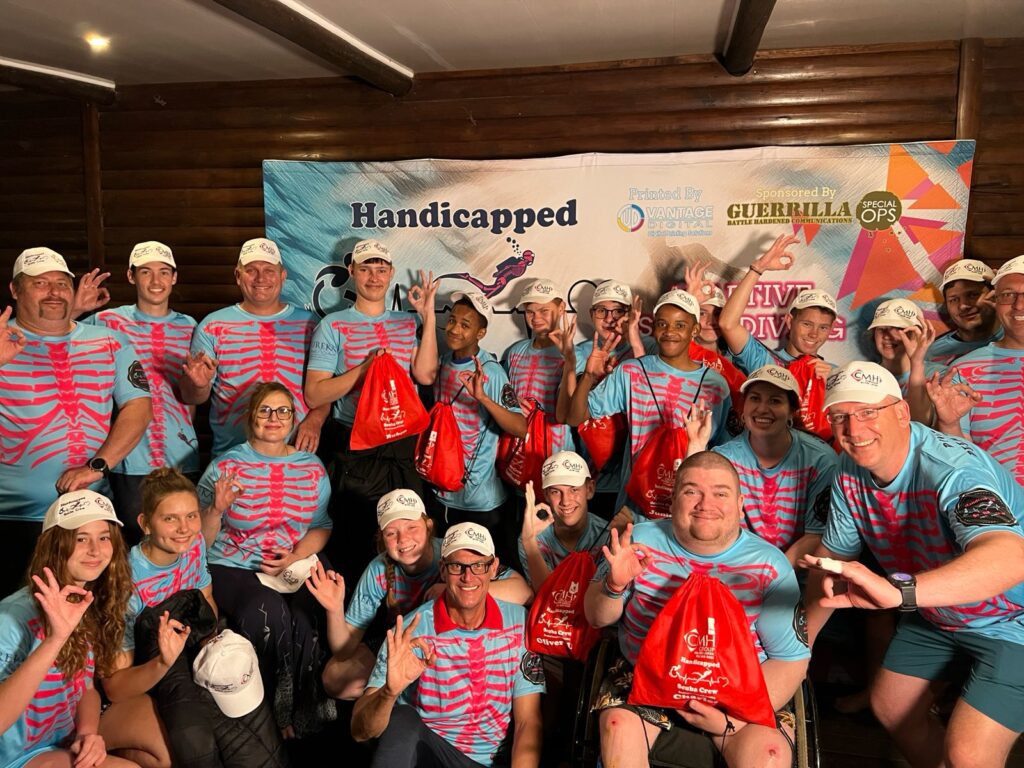
In this conversation, I speak with Byron Ray about his journey, his work, and the philosophy that underpins one of the most inspiring movements in accessible ocean tourism today.
Tell us about your journey and what led you into diving and this work:
My name is Byron Ray, and my journey into diving has never really been about the ocean alone, it’s about what the ocean gives back to people.
I’m an ISC and HSA scuba instructor, and part of Scuba Crew, where we do what most dive centres do, we teach people to dive, but what really matters to us is the community and family that forms around it.
From that sense of community, Handicapped Scuba Crew was born as a non-profit, with one simple purpose, to share the beauty of the ocean with people with disabilities who may never have imagined it was possible for them.
Outside of diving, I run a creative agency in South Africa, which allows me to capture and share the stories of what we experience on these trips with the world.
That’s my day job, but my work with Scuba Crew and Handicapped Scuba Crew is completely voluntary, something I do because of what it means to the people we dive with.
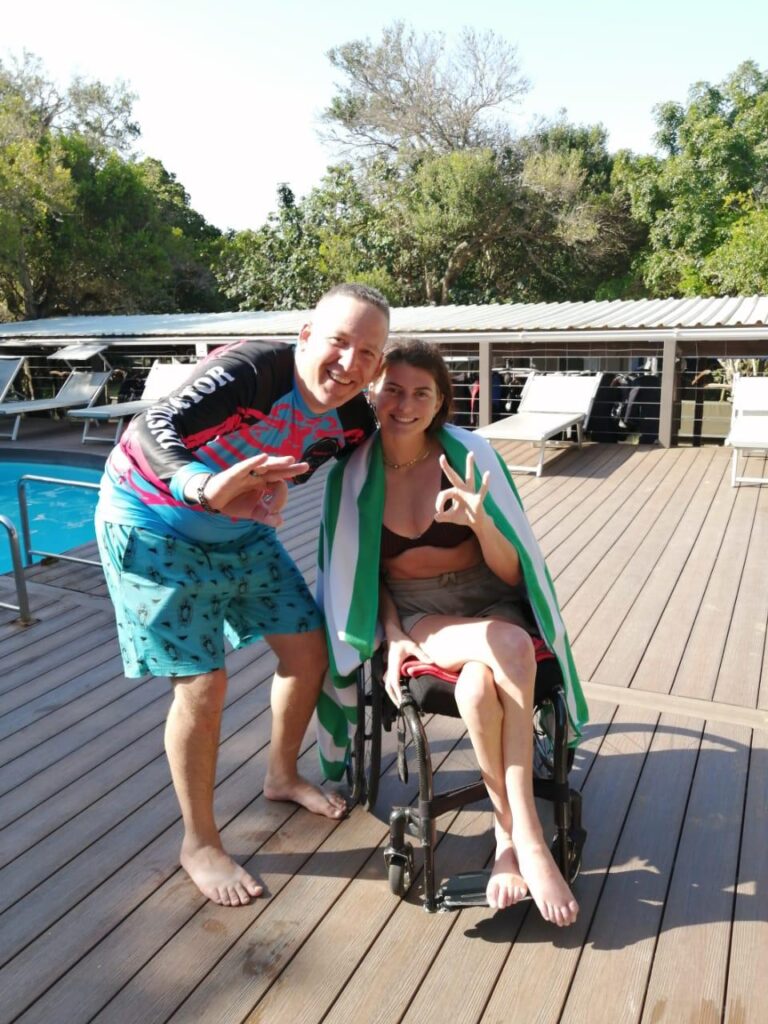
I’ve been fortunate enough to dive as far as Mauritius, but the truth is, it’s not the distance that has shaped me.
What has shaped me are the trips we run as Handicapped Scuba Crew, most of which take place in Sodwana Bay, not because it’s the only place we want to go, but because as a non-profit, travel is expensive and we rely entirely on the generosity of others and our sponsors.
And yet, those trips have become the most meaningful dives I’ve ever done.
Because 99% of the people we take diving have never, and never believed they ever could, experience something like this.
And then you watch them take that first breath underwater, experience weightlessness for the first time, and for a moment be completely free… and that stays with you forever.
How does your dive operation approach accessibility differently?
What we’ve built at Scuba Crew doesn’t feel like a typical dive centre, it feels like a group of people who have found something special together.
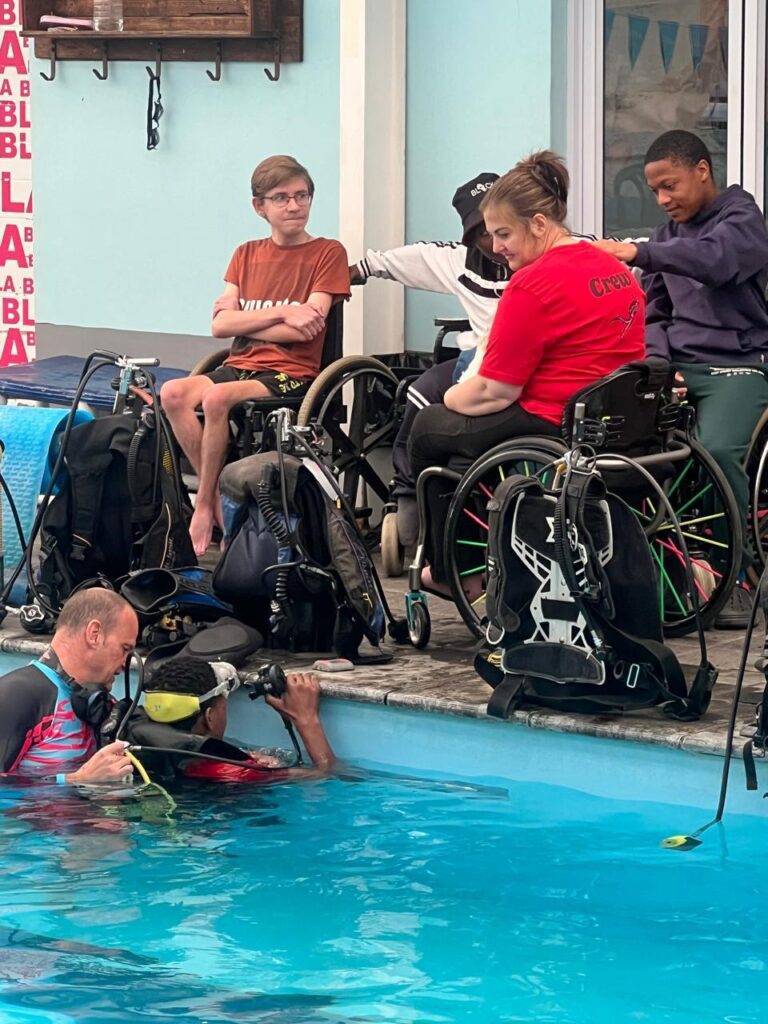
We don’t operate from a single physical dive centre. Instead, we travel, choosing locations that can accommodate wheelchairs and make diving possible. We also run regular pool sessions, often giving people their first experience in water, and sometimes even their first time ever in a swimming pool.
Where needed, we bring our own solutions, including ramps to navigate obstacles that would otherwise stop someone before they’ve even started.
Because for us, access doesn’t start at the water, it starts the moment someone arrives.
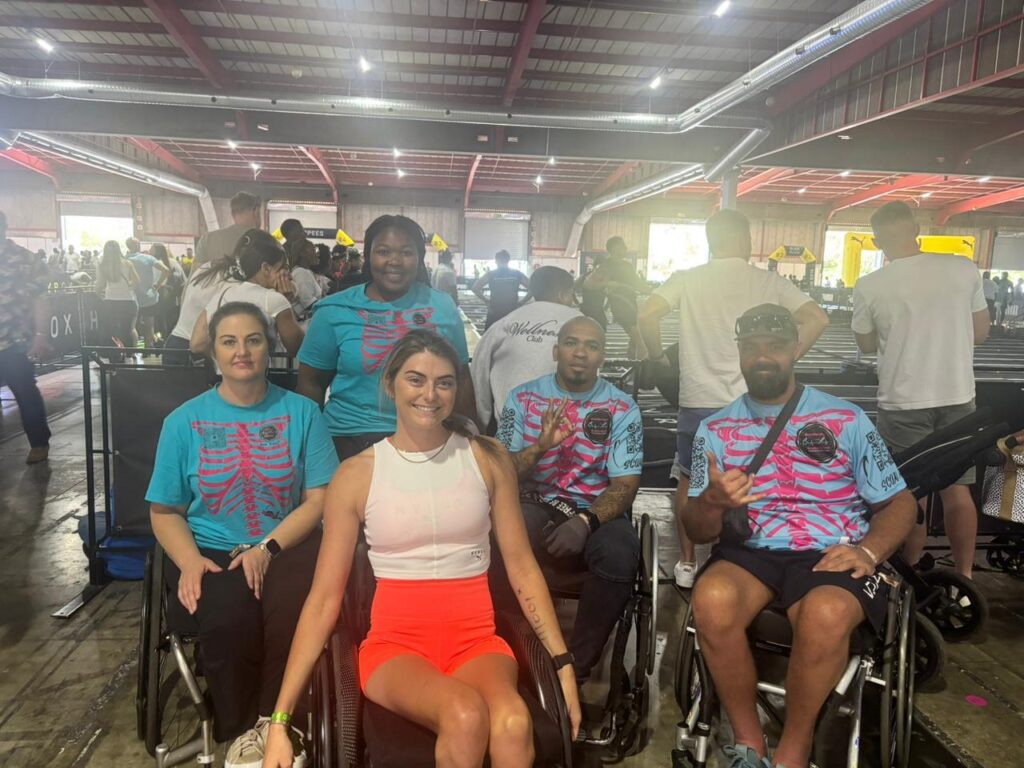
From there, inclusion is simply how things are. Disabled and non-disabled divers learn together, dive together, and afterwards sit together, replaying every moment of the dive.
And that’s where something powerful happens. Our adaptive divers aren’t on the outside, they’re part of the conversation, laughing, sharing, comparing stories with everyone else.
Not just with other disabled divers, but with what the world would call “normal” divers.
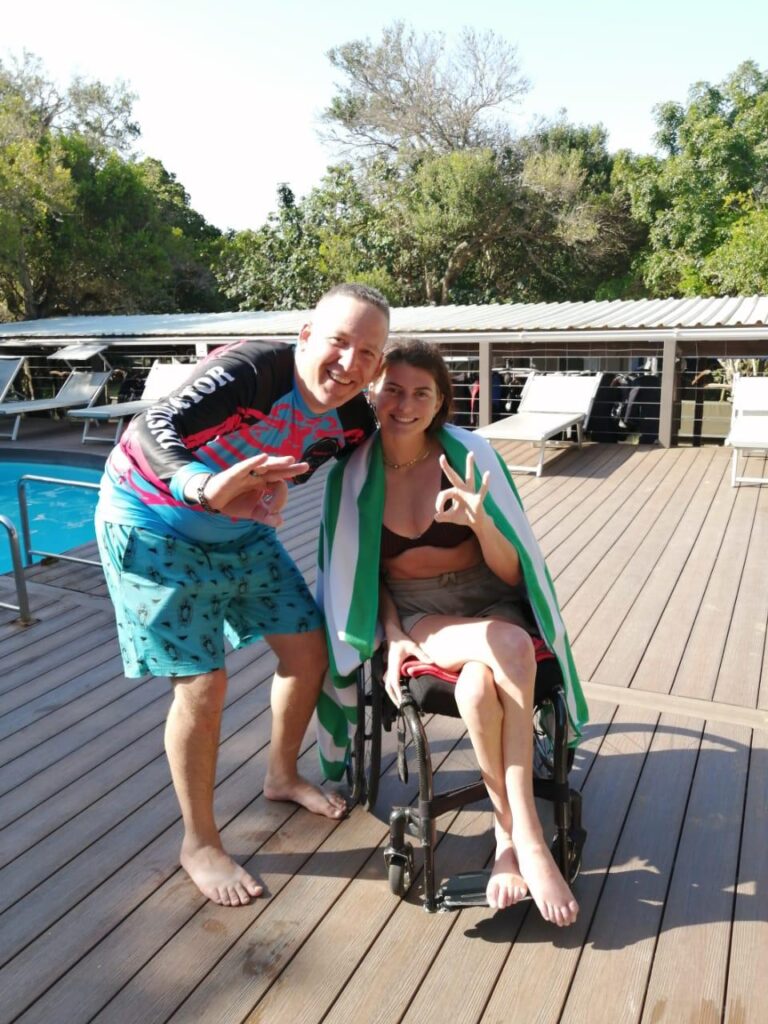
And you can see it in their faces. For a moment, they’re not being seen for their disability, they’re just another diver.
That sense of belonging often means just as much as the dive itself.
What kind of support system do you build around each diver?
What makes everything possible is not just the instructors, it’s the people we build around each diver.
We don’t rely on support divers, we train Dive Buddies, and that training goes far beyond the technical side of diving.
They learn how to assist in the water, helping with equalising, clearing masks, managing buoyancy, even finning when needed. But more importantly, they learn how to include someone and make them feel part of the dive.
A big part of that training is experience. We don’t just explain it, we let them feel it.
We make our Dive Buddies dive as quadriplegics, with their hands and feet tied, so they understand what it means to rely completely on someone else.
For blind diver training, we black out their masks, turning something simple into something disorientating and, at times, frightening.
In those moments, they begin to understand, not fully, but enough to respect it and the responsibility they carry.
Because for many of our divers, this is not just a dive, it’s trust placed entirely in someone else’s hands.
How do you adapt your teaching and communication methods?
We’ve learned that teaching diving is not about following a script, it’s about reading the person in front of you.
So we slow things down, break everything into manageable steps, and adapt how we explain things depending on who we’re working with.
Sometimes it’s showing instead of telling. Sometimes it’s guiding a movement. And sometimes it’s as simple as a squeeze of the arm, a tap on the hand, or a gentle tug on the fingers, especially for blind divers, just to say, “I’m here.”
Because communication underwater is not just about signals, it’s about connection.
We are also very aware of the mindset our divers are in. Many rely heavily on others in their daily lives, and now suddenly there’s someone new asking them to trust and do something unfamiliar and often frightening.
For some, even the sound of their breathing can be overwhelming, bringing back difficult memories.
So we don’t rush it. We acknowledge it, talk through it, and make sure they know they are not alone.
We stay close, move at their pace, and remind them that we are there every step of the way.
At the same time, we treat them as any other diver, with respect and belief in their ability.
Because that balance is where real confidence begins.
How do you identify and support such a wide range of needs?
Every person who comes to us carries a different story.
We’ve worked with quadriplegics, paraplegics, blind and deaf divers, individuals with cerebral palsy, and stroke survivors, to name a few. We’ve also worked with many cognitively challenged individuals, including a group of incredible school children from a school for the severely disabled.
Some were born into their circumstances, others had their lives change in an instant.
So we never assume. We start by listening.
We take the time to understand who they are and how best we can support them, even when communication needs to be adapted.
For example, instead of asking a diver to indicate air using numbers, we’ve taught some to show the “red line” on their gauge to indicate low air.
It’s small adjustments like that, but they make all the difference.
We also watch for the small signs, hesitation, breathing, body language.
If someone feels overwhelmed, we don’t push. We slow down, stay close, and move forward together.
Because sometimes the biggest step is simply finding the courage to try.
What does true inclusion and impact look like to you?
When you step back, what we’ve created is not just about diving.
It’s about giving people something back that they thought they had lost, or maybe never had at all.
That’s why we do this.
Because 99% of the people we take diving have never, and never believed they ever could, experience something like this.
And then you watch it happen.
You watch someone enter the water unsure, carrying years of limitation, and then suddenly experience weightlessness for the first time… and for the first time in years, they are completely free.
You see it in their eyes, that moment where it clicks.
And then afterwards, the tears come. Real, uncontrollable tears of joy, filling a mask, because they never thought this would be possible.
And for me, it’s impossible not to feel that.
It always warms my heart… and more often than not, adds a little extra salt to the ocean too.
Because in those moments, it’s not about disability.
It’s about freedom.